PRODUCT INFORMATION / REVIEWS:
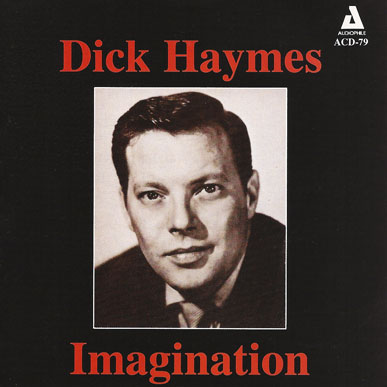
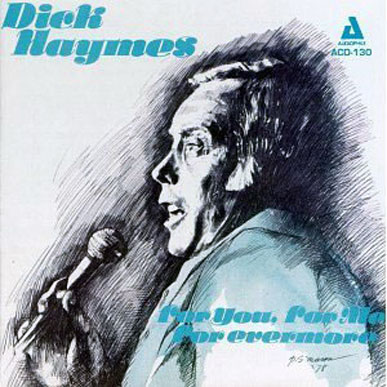
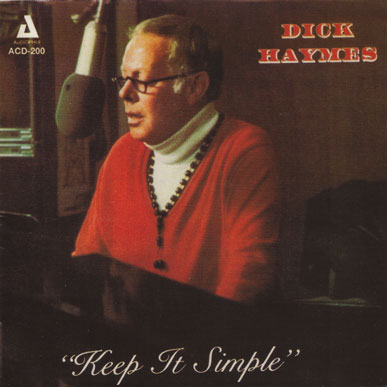
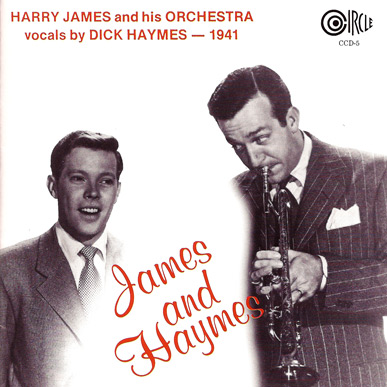
No pop singer of the turbulent 20th century had a more up-and-down, volatile career than Dick Haymes. From his birth in Buenos Aires on September 13, 1916 until his death at Cedars-Sinai Hospital March 28, 1980, in Los Angeles, Haymes erratically enjoyed spectacular successes and crushing, debilitating failures--professionally and personally. Dick wandered about as a teen-ager, ending up in Hollywood where he struggled as an extra in several undistinguished motion pictures. And then he tried songwriting. Fledgling bandleader Harry James listened to Haymes sing one of Dick's tunes in the early '40s, a time when the flashy trumpeter was $30,000 in debt and considering junking his band and returning to Benny Goodman's enormously popular orchestra. "You sing a lot better than you write," James told Haymes after the audition. "Frank Sinatra has cut out and joined Tommy Dorsey," James declared. "You want to take over as vocalist with my outfit?" And so the surprised and pleased Haymes entered the music business. From the Music Makers he switched to Benny Goodman and then to Tommy Dorsey, again succeeding Sinatra. By the summer of 1943 Dick had earned sufficient recognition to go out on his own as a single. ... All fans of Haymes vividly remember his success in films, on sponsored radio shows and on records. He scored big with his Decca diskings of "Little White Lies," "You'll Never Know" and "Stella By Starlight," all of which are revived in this album along with 11 other valued evergreens. By 1949, Haymes ranked alongside Crosby, Como and Sinatra in popularity. But then came difficulties which Dick couldn't handle. His marriages - six in all, as one recalls - failed. Dick and the bottle became constant companions. And his popularity in films quickly disintegrated. He wandered about Europe, with severe financial problems, throughout the 1 960s, living in England, Ireland, Scotland and Spain sporadically but somehow staying alive and singing occasionally. Alan Dell produced a Mercury recording of Haymes in very fine voice but released only in England. Dick returned to the United States in 1971 and was forced to fight immigration difficulties, but he whipped his boozing weakness and with the help of old friend Joe (Sonny) Burke and staged a comeback. Burke recorded Dick on his Daybreak label and helped him undertake a fresh, promising new career. Then came sessions in South Carolina associated with Alec Wilder's Peabody Award-Winning Radio Series "American Popular Song" and later in a North Carolina studio both of which resulted in this album. Haymes made these songs in stereo in 1976 and 1978 in Lexington and Charlotte. Producers Dick Phipps, Roger Dooner and "Tee" Dooley, all longtime fans of the singer, gave Haymes full, unrestricted choice of songs. Loonis McGlohon, a popular pianist with a growing audience, worked closely with Dick as arranger and leader of the trio backing him. Jim Lackey is the tasteful drummer and the bass is played by Terry Lassiter on the Lexington tracks. Rusty Gilder is the string bassist on the tunes recorded in Charlotte. And as the album title indicates, they kept it simple. Dick, back in top form, sings effortlessly and with conviction. No baritone had the quality of low notes that Haymes had. His intonation and enunciation are flawless. His choice of songs is equally !audible. Haymes spent his last years in Los Angeles, working only occasionally but ever hopeful that he would re-establish claim as the baritone of the century, which he may well have been. And then he was felled by lung cancer. The enterprising Audiophile label does all of us a favor by issuing these Haymes cuts, the last records Dick made in his lengthy up-and-down career. Surely he deserved more than he got from his 64 years on the planet Earth. - Dave Dexter, Jr., Sherman Oaks, CA; May 17, 1987
PERSONNEL
TRACKS
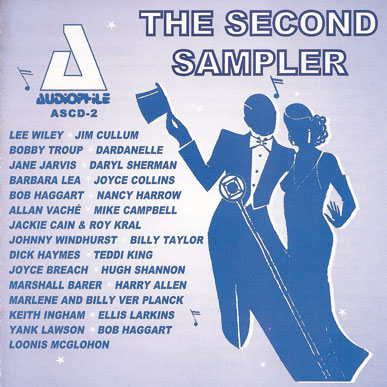
OTHER RELEASES WITH DICK HAYMES
|
||