PRODUCT INFORMATION / REVIEWS:
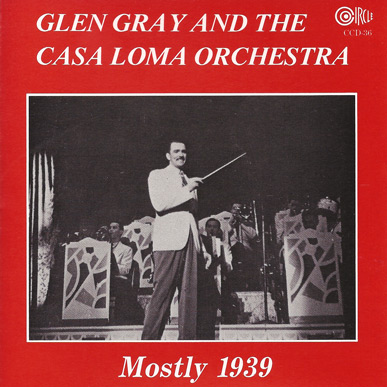
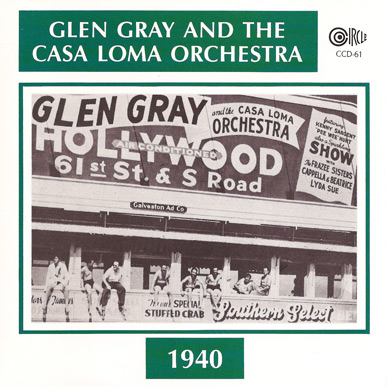
The Casa Loma was the name planned for a swank new night night spot scheduled for opening in early 1929 in Detroit. The club never opened but the opening attraction was to be a band called The Orange Blossoms led by Henry Biagini and booked by the Jean Goldkette office. This group had been active and popular in the Detroit area since the mid-twenties. Subsequently, The Orange Blossoms adopted the club name and thus became what we know as the Casa Loma Orchestra. ... Shortly thereafter bookings became scarcer due to the depression and they left the Midwest to accept a welcomed booking at New York's Roseland Ballroom. This exposure brought the Casa Loma to the attention of Okeh Records and a contract to record six sides. All the sides were instrumentals played with a bright precision that attracted the attention of college students, music reviewers, and other musicians. After this first recording success, the band signed a contract with Brunswick rather than Okeh. Their records continued to attract fans to their appearances, making more important engagements possible such as those at the Glen Island Casino. The most memorable recordings the Casa Loma Orchestra made during this early period with Brunswick were the ballads. Records alone did not create their popularity. More important to their acceptance by the public was the 1933-1934 Camel Caravan radio series which brought them to the attention of the entire country. The ballads reigned in the Casa Loma band book and handsome Kenny Sargent's pleasing way of singing those love songs made him a favorite of the female fans. He regularly stepped from the saxophone section to handle the vocals on the ballads. Trombonist Pee Wee Hunt handled the up-tempo vocals, but the star of the trombone section was Billy Rauch, whose beautiful and unique solo on Smoke Rings made that record a staple for every collector. It is said that his practicing to achieve perfection in his solo for this number was relentless. Rauch was certainly a perfectionist and his influence contributed strongly to the precision and unison playing of the band which the public had come to expect. Guitarist-arranger Gene Gifford was responsible for most of the arrangements and they were excellent. They, however, provided little room for improvisation and jazz solo statements from the band members. Gifford is credited with developing the band's style, and what a style it was! The band members dressed fashionably in white tie and tails and looked like the society page. They played the haunting ballads the public wanted, their record hits of For You, Under a Blanket of Blue, and It's the Talk of the Town and then they would whip the dancers into a frenzy with such flag wavers as Casa Loma Stomp, Black Jazz, and White Jazz. Artie Shaw has said that big band swing really began with the Casa Loma Orchestra. George Simon said, "I cut my big band eye teeth on the music of the Casa Loma and later when Glen Gray left the saxes and stood in front of the band himself everything seemed to fix visually into place." That happened in 1934. They were on top! By 1937, the band suffered somewhat in popularity with the advent of an even more swinging style of music introduced by Benny Goodman, but by 1939 they had begun to react to this competitive influence. Clarence Hutchenreider, an excellent clarinetist, was certainly up to the new demands; Sonny Dunham was capable of playing brilliant trumpet and Murray McEachern had left the Goodman band to join the Glen Gray group in late 1937.. He was equally at home on trombone or alto saxophone and was an inventive jazz soloist. Bill Rauch had lost none of his originality on trombone and still brought that magic tone to his ballad solos. Pee Wee could still handle the comedy vocals with ease and Kenny Sargent underwent a vocal change that kept him "in style." For the band, 1938 was a year of ebb. The new tide of popularity came to the band over the next years. 1939 brought the recording of the Casa Lorna's all-time top instrumental No-Name Jive. Everyone danced the BIG APPLE to this one. It was the product of Larry Wagner and as arranger, he was now shaping the band in new ways. This album, along with the subsequent releases from Circle, will provide evidence of the success of the band in the 40's. Jay McGahee
PERSONNEL
TRACKS
|
||