PRODUCT INFORMATION / REVIEWS:
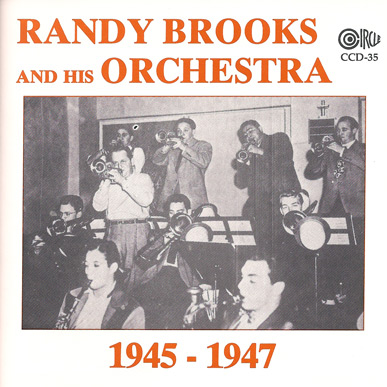
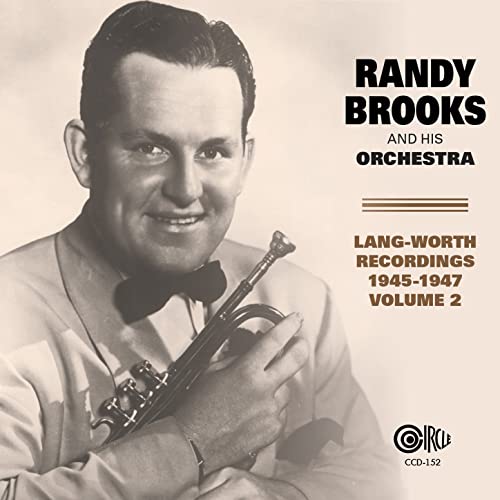
In the Big Band Era there literally were hundreds of orchestras counter crossing America's highways to play at hotels, theaters, and for dancers, and at the same time competition for personnel was most keen, not only for the best vocalists and arrangers but also for distinctive sidemen - some of whom built reputations so strong that they were able to emerge as leaders in their own right. Such was the case as Gene Krupa and Harry James were graduated from Benny Goodman's band, and in a similar way saxophonists Tony Pastor and Georgie Auld led their own orchestras after years of service with Artie Shaw. Actually, there are far too many examples to list here, but we must certainly indicate trumpeter Randy Brooks, who served his tour as a sideman and featured soloist for Les Brown and then ventured out on his own to score even greater success with a most distinctive orchestra. ... Randy Brooks had the looks of a professional football player, but he directed his energy to music very early, performing in his high school orchestra in Maine and then initially becoming a professional musician when he boarded Bob Allen's band bus for jobs around Cleveland. Allen's band seems never to have progressed beyond its own territory in the Midwest, but Randy Brooks' prowess as a trumpeter could not be confined to any territory. As his reputation spread, he accepted an offer from Art Jarrett, who was then reorganizing Hal Kemp's band after that leader's tragic death in 1941. Randy Brooks stood up for many solos in Jarrett's band, often featured on broadcasts from the best hotels. Every prominent leader must have envied Art Jarrett, and by 1944 Les Brown was able to pry the trumpeter away to star in his Band of Renown. Randy Brooks was now featured on many records by Les Brown, and his popularity grew even more. With that applause ringing in his ear, Randy Brooks now realized that the next logical step was to take out a band of his own, and the end of the Second World War allowed for the start of his efforts. Initially, he signed a lucrative contract with a major record company and turned out a succession of hits like Tenderly and Harlem Nocturne. Also, now that he was leader, Randy was able to feature the scores of another native of Maine, not a relative but a friend with the same last name, John Benson Brooks, and these two created music as well tailored and fashioned as any Brooks Brothers suit. Actually, Randy and John had been together in Les Brown's band, but John's scores never received proper attention there; Randy was determined to correct that error. Obviously, Randy was always the featured soloist in his band, similar in style to Harry James, but with even more power and a distinctive tone as well. Subtly, John Benson Brooks stood in the wings to compose and arrange the vast majority of the band's music, interjecting even then the burgeoning innovations of be-bop, and he also proved to be a romanticist, much as he does here on Tempo For Randy and Dreamer's Holiday. In addition, Randy Brooks needed soloists to play those inventive scores, and singers who could communicate with an audience. The musicians came quite willingly when they heard the arrangements, most notably pianist-vibraphonist Shorty Allen and alto saxophonist Eddie Kane, and the great Stan Getz must be included in a succession of tenor saxophonists who played with the band. At the first recording sessions Billy Usher sang the romantic ballads, and when Usher tried for success on his own he was followed by Harry Prime. Prime's vocals were especially favored by the critic George T. Simon, then the editor of Metronome, who ended his review quite simply by stating that Prime was "an excellent singer." As for the ladies, Randy Brooks had a succession of three beautiful women who sang as sweetly as they looked. In this album Kay Allen tells us about the Wonderful Time In Columbus, while Aileen Stanley, Jr. projects the wit about The Dum Dum Dummy Song, and Marjorie Wood (who had just left Boyd Raeburn's innovational band) assures one and all that This ls It. Moreover, on every track the listener can anticipate the dynamic vitality as well as the muted simplicity of the leader's trumpet. Yet, whether subtle or soaring, Randy Brooks is always in perfect control of his trumpet and his orchestra, and for me the highlights here are the four instrumentals, most notably John Benson Brooks' arrangement of Caravan that would make its co-authors Juan Tizol and Duke Ellington stand up and cheer, as well as John's own ethereal effects on Cloud #9, music so delightful it should have every listener walking on air. Finally, and fortunately, this album makes the music of Randy Brooks once more available. Those of us who know the band from the past must greet the album as we would an old friend. In turn, younger listeners will be making friends for life. Jack McKinney
PERSONNEL
TRACKS
OTHER RELEASES WITH RANDY BROOKS
|
||