PRODUCT INFORMATION / REVIEWS:
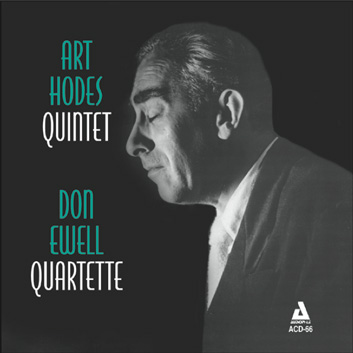
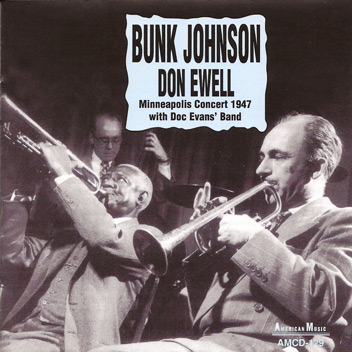
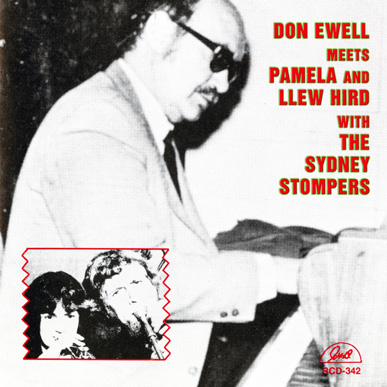
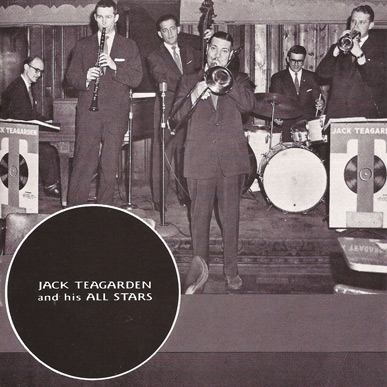
I don't think I ever heard a bad Don Ewell record. I suppose there may be some and there must have been a few that he himself was not particularly happy with. I've known the man's works for more than thirty years and I can truthfully state I've heard all the major and many of the lesser-known players who work in the broad general area known as traditional jazz. I'll add that none of them have impressed me as much as the late Don Ewell. Why is this, I wonder? I think because as much as some of the hallowed men who followed in the wake of the pioneers like Jelly Roll Morton, Earl Hines and others have made fine music, somehow most of them seemed to be pale copies at time, only ocasionally playing with real individuality. I think Don Ewell better than any of them managed to fashion a style that enabled him to play with the ease and relaxation so necessary to good jazz no matter what branch of the tree one is speaking of. ... It isn't that he was a phenomenal technician, although he had his share of chops - technical ability more than adequate to express his ideas - and sure steady rhythmic propulsion to move the listener along with his music. Don Ewell made strong impressions as a musician, and as an artist ever since his childhood in Baltimore where he was born in 1916. He began playing professionally or semi-professionally while still in high school and his work enabled him to earn scholarships to the famed Peabody Conservatory in music and to the Maryland Institute of Fine Arts. Eventually he took both scholarships. He is one example of a musician who used the teaching and history of the great masters of classical music to the best possible advantage in a jazz setting. His older brother trombonist Ed Lynch Ewell, who at one time worked briefly with the Casa Loma band, formed a big band called the Townsmen patterned after a popular local band known as the Tunesmen, and a proficient Don Ewell even stole their theme song, Don Redman's ballad If I'm True, for which he wrote an arrangement. The Tunesmen and the Townsmen evidently copied the fine Bob Crosby big band dixieland style and enjoyed a moderate degree of success. Don also led his own trios and quartets. In these pre-New Orleans awakening days Don's playing pretty much followed along the lines of Earl Hines, Teddy Wilson and Jess Stacy. It was the prominent Baltimore record collector Beale "Bill" Riddle who first played Don Jelly Roll Morton's records, and at first Don did not express much interest in them. Riddle persisted and by the time the war broke out Don became a confirmed Jelly Roll Morton devotee. Morton's music, as all musicians familiar with its body of work can tell you, is tricky, not at all easy to play properly. No one has gone on record to tell whether Ewell and Morton's paths crossed prior to Morton's death in 1941. Some amazing Mortonia was privately recorded by Riddle in 1938, around the same period that Morton was doing his justly famed Library of Congress Recordings, and perhaps Riddle played these for Ewell. At any rate Ewell had gotten exposure to Baltimore's Pennsylvania Avenue, home of the Royal Theatre, the city's Apollo, and many of the clubs and had worked a short while in Atlantic City with a combo led by trumpeter Sidney DeParis, proper training for one to follow with a life devoted to playing traditional or classic jazz. At any rate Ewell's story picked up immediately upon his discharge from the Army in 1945 when he sat in with Bunk Johnson's band at the Stuyvesant Casino in New York late that year. He made a major impression on Bunk and Baby Dodds who both remarked on how much he sounded and played like Jelly Roll, and Johnson told him as soon as he could book back into New York in 1946 Ewell would be his man on piano. That event happened and Ewell never looked back. Until his death in Florida in 1983, Don Ewell was rarely out of work. He worked with Sidney Bechel, opened Bill and Ruth Reinhardt's Jazz Unlimited in Chicago, played there with Muggsy Spanier, Miff Mole, Darnell Howard, and on the West Coast with Kid Ory and Lee Collins at the peak of the revival years for New Orleans and traditional jazz in the late forties and early and middle fifties. He spent several years on a world tour with Jack Teagarden, and had become by that time a photographer of expert proficiency producing thousands of superb color slides from his world travels. A man deeply troubled with inner torment, Ewell managed to produce superb music despite a gloomy presence on the bandstand, one which fellow musicians often felt detracted by in their own efforts to rival his own unique skills. While I do not know how many Don Ewell recordings there are on the market at the present time, this is a pretty good place to start building a Don Ewell collection. And if you have any feeling for the large body of music that falls under that designation of classic jazz this is not a bad place to come aboard. Sharing the proceedings with Ewell in this superbly recorded set by the late Ewing D. Nunn in 1959, are guitarist Marty Grosz, a forceful and ebullient guitarist whose playing and vocals have delighted thousands throughout the world in the past thirty years. Bassist Earl Murphy, rarely heard or recorded so well, for some a "thud" player, for others a reasonably adept professional who after years as a banjo player in the twenties switched to bass and worked steadily in music with many of Chicago's best players including the Marsala Brothers. Personable and well-liked he died alone on the top floor of a sleazy four-story walkup surrounded by girlie magazines, his many rebuilt basses stashed in apartments all over town Trumpeter Nappy Trottier comes from a small town in Michigan and after a career in physical education, he turned more and more to music after World War II and became a presence in Chicago around 1950 and worked often with George Brunis and had a devoted following for the next fifteen years or so. He has a big tone and plays quite well on the slow numbers where he manages strong simple statements. He has since returned to Michigan. Working within the Jelly Roll Morton framework, a style which managed to trap dozens of white players who learned the mechanics but rarely the swing, Ewell also blends with the ease of a master some of the rare elements of the late Charlie "Cow Cow" Davenport in his use of the New Orleans catch-up bass and boogie woogie and blues figures. This is a terribly difficult style to bring off and Ewell makes it part of his vocabulary without the customary awkwardness we are used to hearing from most of the devotees of this style of playing. I'll say it again, Don Ewell never made a bad record. This is a good one and has some good and thoughtful playing by Trottier, Grosz and Murphy to boot. It is beautifully recorded. -Frank Driggs
PERSONNEL
TRACKS
OTHER RELEASES WITH DON EWELL
|
||